Research
DTU has launched the trial version of AgenTex v1.0, a multi-agent AI system designed to assist researchers with literature searches, drafting, peer review, and formatting of scientific papers according to international standards.
The platform introduces a new AI-integrated approach to research. AgenTex v1.0 is built on a multi-agent AI architecture and aims to become a comprehensive research assistant that helps scientists improve the quality of their international publications while fostering innovation in academic environments.
A survey conducted at research & education institutions in Central Vietnam identified five common bottlenecks hindering research and publication: failure to follow the IMRaD academic structure, lack of pre-submission peer review, difficulties with LaTeX formatting, literature reviews take two to five days, and the fragmented nature of research tools. According to data by Overleaf in 2023, 67% of researchers spend more than 20% of their time on formatting.
In response to these challenges, DTU developed AgenTex as a technical solution and a step toward creating a virtual research assistant that helps scientists streamline the more technical aspects of their research.
AgenTex v1.0 is built on a multi-agent AI architecture consisting of five system layers and nine specialized AI agents operating through a unified web interface. The platform uses React for its user interface, which enables researchers to monitor progress in real time, while the service layer integrates FastAPI, Redis, and Celery to coordinate tasks such as literature search, draft generation, peer review, and LaTeX compilation. According to the development team, this architecture ensures response speed and efficient handling of complex research workflows behind the scenes.
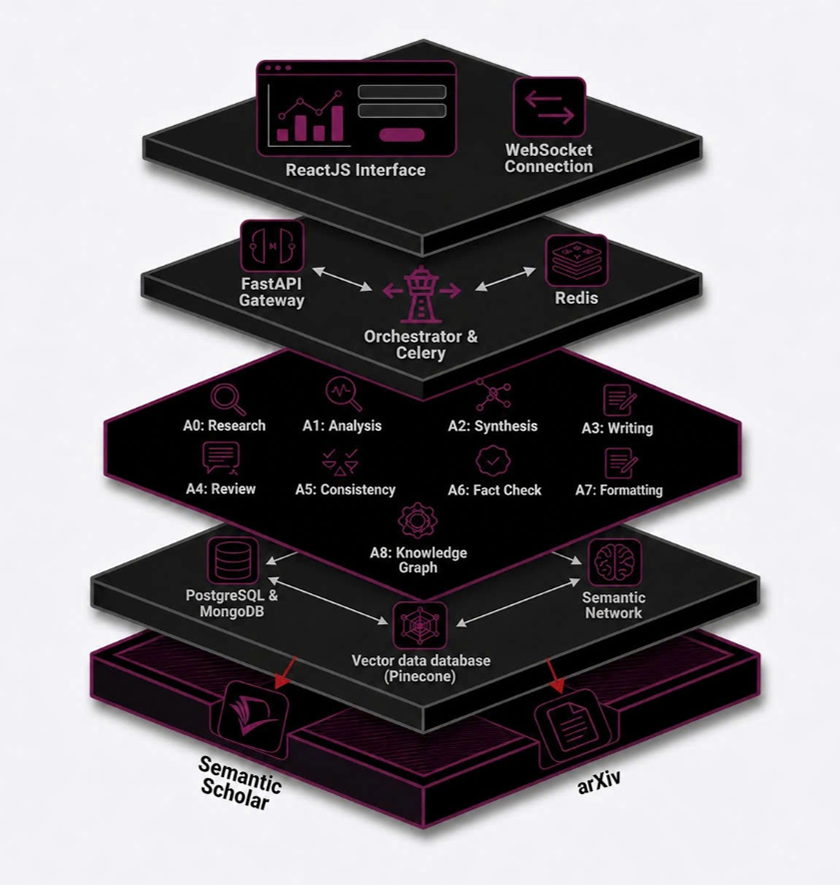
The five layers and nine specialized AI agents of AgenTex v1.0. Photo: DTU
At the core of AgenTex is its ecosystem of nine AI agents coordinated through a state-machine model. Rather than relying on a single language model, the system divides the research process into specialized roles: idea generation, literature search and evaluation, manuscript drafting, academic review, and publication formatting in LaTeX.
“Through a transparent and rigorous workflow, the system helps lecturers and students transform ideas into high-quality research outputs,” says Phan Vu Minh Tue, creator of the AgenTex project.
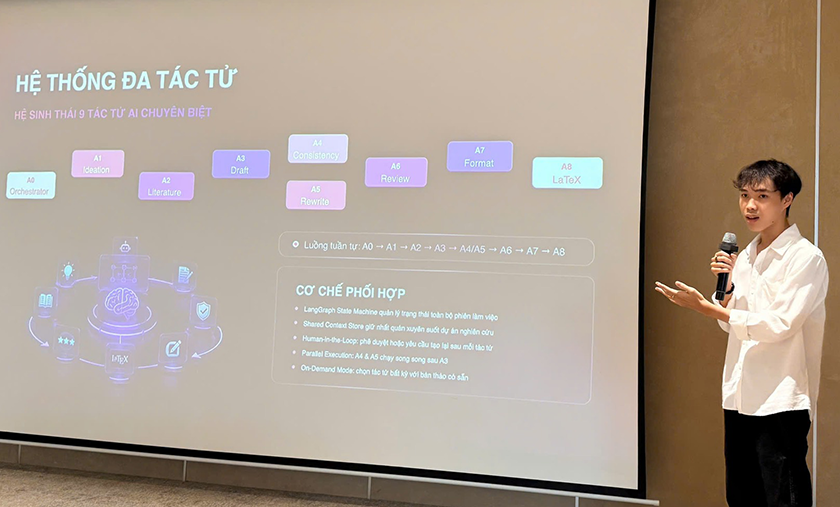
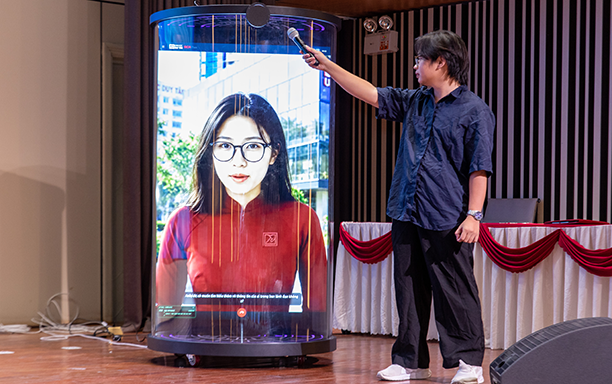
Minh Tue, creator of AgenTex at DTU, introducing the multi-agent AI application. Photo: DTU
AgenTex v1.0 offers three core functionalities. The drafting functionality simultaneously searches ArXiv, Semantic Scholar, OpenAlex, and Tavily to generate IMRaD-based outlines, produce citation-supported abstracts, and export LaTeX code. Estimations are that the system can process 15–20 references in 10-15 minutes.
The reviewing functionality simulates peer-review by evaluating arguments, data, how well the requirements of each type of magazine are met, and research ethics. The formatting functionality finally supports browser-based LaTeX compilation and compatibility with templates from IEEE, Elsevier, Springer, and ACM. Outputs can be exported in PDF, TeX, or ZIP formats.
The platform can retrieve data simultaneously from ArXiv, Semantic Scholar, OpenAlex, and Tavily; assist in building research outlines following the IMRaD structure; perform peer-review simulations; and format manuscripts according to IEEE, Elsevier, Springer, or ACM standards. According to the research team, aligning papers with journal requirements helps ensure academic factors and professionalism of the draft from the outset. This reduces time spent on technical revisions, minimizes formatting errors, and increases the likelihood of meeting international publication standards.
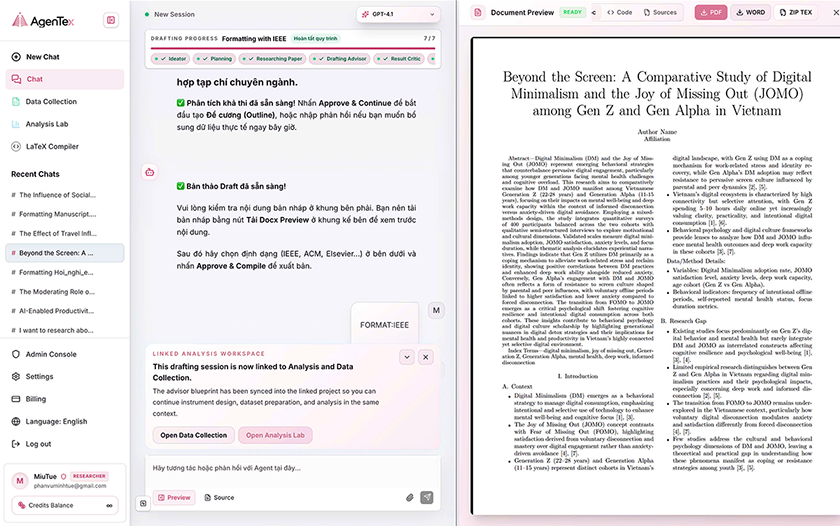
AgenTex v1.0 user interface at DTU. Photo: screenshot
Dr Truong Tien Vu, Head of the DTU Department of Science & Technology, noted that AgenTex embodies many of the core principles of the “AI scientist” model proposed in Nature in March. Designed as an end-to-end approach, it streamlines every stage of the research lifecycle: from idea generation and literature review, experiment design, and data analysis to manuscript preparation in international LaTeX formats.
He highlighted AgenTex’s human-in-the-loop mechanism as a key strength. This allows researchers to personally supervise and validate results at every stage, to control and mitigate the risk of AI hallucinations.
According to Dr Tien Vu, combining automated multi-agent AI with human oversight enhances research productivity while maintaining academic ethics. In its current version, AgenTex v1.0 is suited for exploratory and discovery-oriented research. Future versions are to support more complex activities in research & development and in specialized fields.
Following the release of the AgenTex v1.0 trial version, the development team plans to expand the platform during 2026 -2027 by integrating multimodal AI, developing collaborative environments for multiple authors, and developing a cloud-based research service for many universities. As part of its vision to become an “AI university”, DTU is gradually building an AI-integrated ecosystem for all activities, from administration and teaching to learning, research, and entrepreneurship.
At the launch ceremony, Mr Tran Nam Tu, Deputy Director of the Department of Science, Technology, & Information under the Ministry of Education & Training, opined that developing AI products in education is an important part of creating controlled AI-powered smart education. He judged that DTU’s AI products contribute to the development of shared platforms that meet demand from training, research, and management.
“DTU should continue to develop AgenTex and improve it to increase its value as the software moves toward broader societal application,” he added.
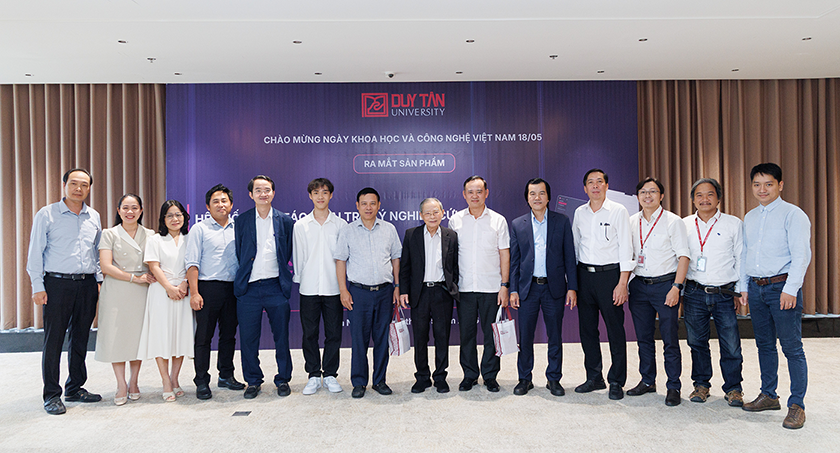
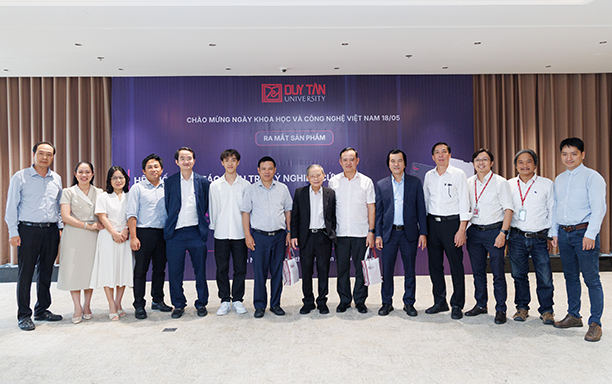
Leaders of the Ministry of Education & Training and of DTU with the AgenTex
research team at the launch ceremony. Photo: DTU
The university currently maintains an academic data repository of about 700 terabytes, related to around 350 million scientific papers and publications worldwide. It also actively deploys open-source AI models on its own AI servers. According to the university, this foundation is critical for developing AI-powered capabilities in search, retrieval, classification, manuscript generation, and support of research driven by big data.
DTU Provost Dr Le Nguyen Bao explained how the university plans to include additional datasets covering Vietnamese science projects, dissertations, patents, and mainstream news sources. This would enable AgenTex not only to access global knowledge but also to better understand research and innovation in Vietnam.
“If all requirements regarding data copyright, information security, infrastructure, and operational mechanisms are met, it would be possible to share the system more broadly as a free resource for the domestic research community,” he stated.
In addition to AgenTex, research groups and service units across DTU are expected to launch 10-5 additional AI products within the next one to two years, further advancing the university’s AI ecosystem for its AI-university model.
“Our vision is to build a complete AI ecosystem for a true AI university,” Dr Bao said.
(Media Center)
Other News