Research
Assoc. Prof. Dr. Nguyen Gia Nhu: Financial Centers Are Racing to Build Digital Regulatory Frameworks and Technology
Deputy Prime Minister Nguyen Van Thang signed Decision No. 04/QD-HDDHTTTC on July 22, 2026, approving the Plan for the Development of an International Financial Center in Vietnam through 2035. Against this backdrop, competition with major financial centers in the region and around the world is creating new requirements for technology, institutional frameworks, and operational capacity. A reporter from Industry and Trade Newspaper spoke with Assoc. Prof. Dr. Nguyen Gia Nhu, DTU Vice Provost, about these issue.

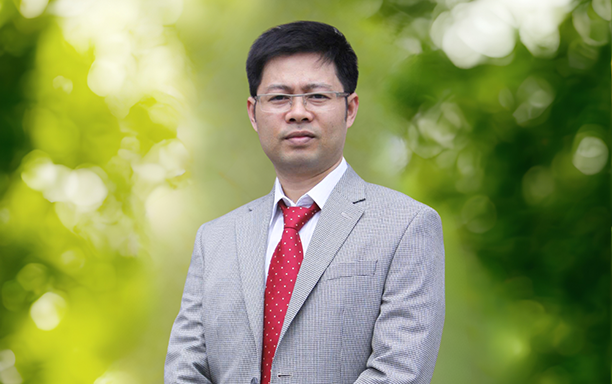
Assoc. Prof. Dr. Nguyen Gia Nhu, DTU Vice Provost
Technology paves the way for Digital Finance
From a technology perspective, how do you assess Vietnam’s goal of developing an international financial center at a time when leading global financial hubs such as Singapore and Dubai are competing through digital platforms, Fintech, and artificial intelligence?
Assoc. Prof. Dr. Nguyen Gia Nhu: At its core, a 21st-century international financial center is a technology platform. Its strength is no longer measured by the number of banks it hosts or its geographic location, but by its digital infrastructure, data-processing capabilities, and the reliability of its transaction and payment systems. Singapore has risen to the forefront through regulatory sandboxes, open API infrastructure, and asset-tokenization projects. Dubai has established a dedicated authority to regulate virtual assets.
Competition among financial centers today is, in essence, a race to develop superior digital regulatory frameworks and technologies.
In this context, Vietnam’s goal of ranking among the world’s top 75 financial centers, the top 25 in the Asia-Pacific region, and the top three in ASEAN under the Global Financial Centres Index, or GFCI, is ambitious but achievable - provided that we move decisively toward digital finance. Vietnam is a latecomer, but that can also be an advantage. We are not burdened by core systems that have been in operation for 30 or 40 years, as is the case in London or New York. We have the opportunity to build a cloud-native financial center that is digital from day one, with artificial intelligence and big data integrated directly into its infrastructure. Combined with Vietnam’s large pool of young engineers, high adoption rate of digital payments, and clear political commitment, the greatest challenge lies not in technology itself, but in the speed at which the regulatory framework can be completed and internationally recognized operational capabilities can be developed.
What role will technologies such as artificial intelligence, Big data, and blockchain play in helping the International Financial Center mobilize, allocate, and efficiently utilize financial resources?
Assoc. Prof. Dr. Nguyen Gia Nhu: These three technologies address three long-standing bottlenecks in financial markets: information asymmetry, high transaction costs, and a lack of trust. AI is fundamentally changing how capital is priced and allocated. Machine-learning-based credit scoring - technology that enables computers to identify patterns and analyze data - can expand access to financing for millions of small and medium-sized enterprises, which account for more than 97% of businesses in Vietnam. AI can also serve as a real-time risk-management tool for anti-money-laundering efforts and liquidity warnings.
Big data is the “soft infrastructure” of a financial center. Markets can allocate capital efficiently only when prices accurately reflect available information. Supervisory technology, or SupTech, and regulatory technology, or RegTech, enable regulators to monitor markets continuously rather than relying on periodic ex-post inspections - an advantage that international investors greatly value. Blockchain’s greatest contribution lies in the tokenization of real-world assets. It can divide real estate, infrastructure bonds, and carbon credits into fractional ownership interests that can be traded around the clock. It can also shorten clearing and settlement cycles, helping unlock sources of capital that are currently frozen or underutilized.
The key is to design these three technologies as an integrated system: big data serves as the raw material, AI acts as the analytical brain, and blockchain provides the layer of trust and execution. If Vietnam can quickly establish a pilot framework for tokenized green bonds in line with the plan’s green-finance objectives, the country could develop a differentiated product with which to compete in the region rather than simply following existing models.
What breakthroughs do you expect the International Financial Center to create for Vietnam’s Fintech ecosystem, digital banking sector, and application of AI in finance in the coming years?
Assoc. Prof. Dr. Nguyen Gia Nhu: I expect four major breakthroughs.
The first will be a regulatory breakthrough. The greatest obstacle facing Vietnam’s fintech sector has long been the lack of a comprehensive legal framework. The International Financial Center, operating under special mechanisms approved by the National
Assembly, can provide an environment in which regulatory sandboxes are implemented systematically. Companies will be able to test new products and business models within a controlled environment, while successful models will have a clear pathway toward formal incorporation into the regulatory framework.
The second breakthrough will involve capital flows and standards. The presence of international financial institutions will not only provide growth-stage capital for startups, but will also require them to mature and comply with global standards for governance, risk management, and cybersecurity.
The third will be a breakthrough in digital banking through open-banking models, standardized API infrastructure, digital-only banks, and embedded financial services in e-commerce, logistics, and digital agriculture.
The fourth will involve artificial intelligence. Over the next five to seven years, joint laboratories established by banks, universities, and technology companies are expected to develop AI models specifically designed for the Vietnamese language and Vietnam’s financial-market data.
In particular, under the model of a single financial center operating in two cities, Da Nang has the opportunity to become Vietnam’s national “laboratory for fintech and green finance.” Successful solutions could then be expanded on a larger scale in Ho Chi Minh City. This complementary division of roles is a distinctive feature of Vietnam’s model.
Human capital and trust are the foundation
From the perspective of DTU, which has considerable strengths in information technology education, what challenges and opportunities does the development of the International Financial Center create for training highly qualified professionals in interdisciplinary fields such as Fintech, data science, and applied AI in finance to meet international standards?
Assoc. Prof. Dr. Nguyen Gia Nhu: Ultimately, every financial center is built around people, and human capital is the factor that requires the longest lead time. Infrastructure can be constructed within three to five years, but developing an entire generation of internationally qualified financial-technology professionals can take a decade. The plan sets 2035 as a key milestone, which means that students enrolling in university this year will become part of the core workforce by the time the center is fully operational.
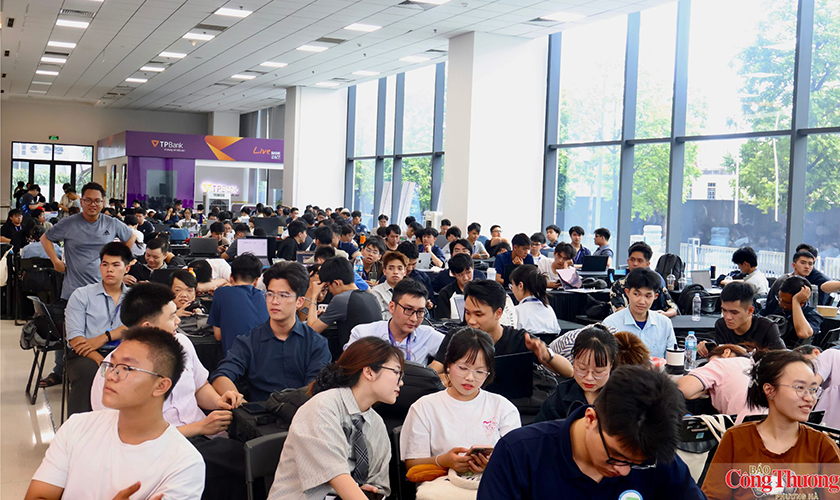
The International Financial Center needs to train a new generation of Fintech professionals
The greatest challenge is the interdisciplinary nature of the field. Fintech professionals must be able to think fluently in both the language of technology and the language of finance. Therefore, they cannot be trained simply by mechanically combining two existing academic programs. Curricula must be redesigned from the ground up around the actual problems and requirements of the industry. Other challenges include meeting international standards for specialized English, preparing students for globally recognized professional certifications such as the CFA and FRM, and retaining highly qualified faculty members amid competition from companies within the financial center offering more attractive compensation.
However, the opportunities are greater than the challenges, particularly for universities in Da Nang, one of the two locations of the International Financial Center. For the first time, students in Central Vietnam will be able to intern and launch startups within an international financial ecosystem in the same city where they study.
DTU has identified four strategic directions for addressing the human-capital challenge. First, the university is developing genuinely interdisciplinary programs in Fintech, Data science, and AI in finance, with businesses participating from the curriculum-design stage. Second, it is promoting an “open laboratory” model that brings real-world industry problems into the classroom. Third, the university is expanding international cooperation in academic programs and professional certifications. Fourth, it is placing greater emphasis on reskilling and upskilling the existing workforce in the finance and banking sectors. With effective cooperation among government, academia, and industry, human capital will not become a bottleneck. Instead, it can become Vietnam’s most sustainable competitive advantage.
How should Vietnam prepare in terms of cybersecurity, data protection, and the legal framework for digital assets to ensure that its International Financial Center earns the confidence of international investors?
Assoc. Prof. Dr. Nguyen Gia Nhu: In finance, the real product being sold is trust. In digital finance, that trust must be built on three main pillars.
Firstly, in terms of cybersecurity, an international financial center will inevitably be a prime target for cyberattacks. Security must therefore be incorporated as a design principle from the very beginning. The center should implement a Zero Trust architecture, establish a security operations center that provides continuous monitoring around the clock, conduct regular incident-response exercises, and require compliance with international standards such as ISO 27001 and PCI DSS. International investors will evaluate the financial center according to these very standards.
Regarding data protection, the key is to strike a balance between protecting data and enabling it to flow. Vietnam must consistently enforce personal-data protection regulations while establishing clear mechanisms for cross-border data transfers - the lifeblood of every international financial center - in line with international practices such as the European Union’s General Data Protection Regulation, or GDPR.
The legal framework for digital assets will be the most important test of investor confidence. Vietnam has already established a foundation by formally recognizing digital assets as a category of property under the law. The next step is to translate this recognition into specific regulations for the International Financial Center. These should include licensing requirements for digital-asset exchanges and custodians, mandatory segregation of customer assets, rules governing stablecoins and the tokenization of real-world assets, and full compliance with the Financial Action Task Force’s anti-money-laundering standards.
According to Assoc. Prof. Dr. Nguyen Gia Nhu, the experiences of Singapore and Dubai demonstrate that transparency and consistency are critically important. International investors are not looking for a place without rules. They are looking for a place where the rules are clear, stable, and enforced fairly. If Vietnam can achieve that within the next two to three years, it will be the most compelling invitation the country can extend to global capital.
(Media Center)
Other News