Duy Tan Dream
Hero of Labor and Distinguished Teacher Le Cong Co: “Young people should see AI as an opportunity to master technology”
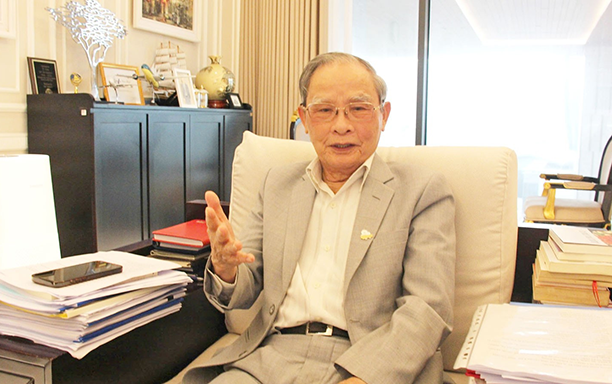
As artificial intelligence (AI) profoundly transforms education and the labor market, creativity, adaptability, critical thinking, and the ability to master technology has become decisive factors in the competitiveness of younger generations. Young people should view AI as an opportunity to master technology while proactively developing foreign-language proficiency, a global mindset, lifelong learning skills, and multicultural experience so they can compete confidently in ASEAN and global labor markets.
On the sidelines of the ASEAN AI Hackathon 2026 (AAIH 2026) finals in Da Nang, which brought together students from many of the region’s leading universities from August 19 to 21, the People’s Deputies Newspaper spoke with Hero of Labor and Distinguished Teacher Le Cong Co, former member of the Eighth National Assembly and Chairman of the Duy Tan University Council, about artificial intelligence in the new era.
Sir, AI has fundamentally changed how people learn, work, and create. From an educator’s perspective, which core competencies will determine workers’ ability to adapt and remain competitive in the AI era?
Hero of Labor and Distinguished Teacher Le Cong Co: I do not see AI as merely a technical tool. It is a wave transforming the very way people think. Machines are now extremely good at performing repetitive tasks and analyzing enormous volumes of data in an instant. So, what allows humans to remain relevant? I believe the answer lies in the qualities that machines cannot replicate.
First and foremost is the ability to ask the right questions. AI is very good at providing answers, but it does not inherently know which questions should be asked. Those who know how to question, evaluate, and frame problems will always be needed, regardless of how far technology advances.
Second is the ability to connect seemingly unrelated ideas. AI optimizes processes based on algorithms, but truly groundbreaking discoveries throughout history have often emerged at the intersection of different fields - between engineering and art, or science and philosophy. That is territory only humans can explore.
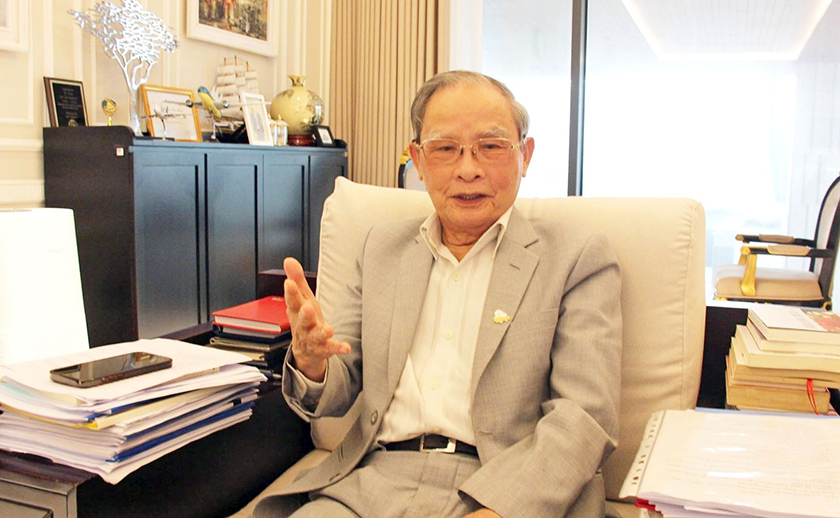
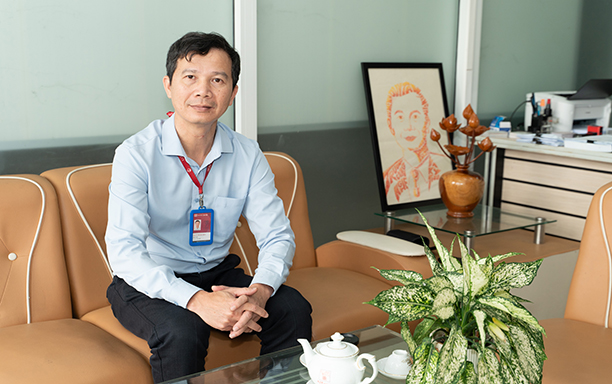
Hero of Labor and Distinguished Teacher Le Cong Co, former member of t
he Eighth National Assembly and Chairman of the Duy Tan University Council. Photo: Tan Tai
Third is kindness and ethical judgment in the use of technology. Empathy, cultural understanding, and the ability to recognize the boundaries of what should and should not be done are qualities machines have never possessed.
Finally, and no less importantly, is the capacity for lifelong learning. A university degree is no longer the destination; it is merely the starting point.
As AI transforms the global labor market, how do you assess the capabilities of today’s students? What should universities do to help students enter ASEAN and global labor markets with confidence?
Hero of Labor and Distinguished Teacher Le Cong Co: I have had opportunities to meet and interact with students from Vietnam, Singapore, Malaysia, Thailand, and elsewhere. I have found that Vietnamese students are by no means inferior in intelligence or their ability to learn new technologies. Their shortcomings lie in three other areas.
The first is language proficiency. For many Vietnamese students, English remains merely a subject they must pass to earn a degree rather than a practical tool for their careers. Meanwhile, students elsewhere in the region use English naturally to give presentations, negotiate, and write specialized documents, as naturally as breathing.
The second is exposure to the wider world. Most Vietnamese students still study in environments largely confined within the country and have few opportunities to engage with other cultures. This unintentionally creates a comfort zone that makes them hesitant to venture beyond familiar surroundings.
The third is their way of thinking. Traditional education is based on teachers lecturing and students listening, so many students are reluctant to debate or challenge what they are told. Their peers elsewhere in the region, meanwhile, are encouraged from an early age to seek solutions independently and confidently defend their views.
To close these gaps, universities must make fundamental changes. Academic programs should meet international standards, with some degree programs taught entirely in English. Students should also have more opportunities to go abroad through exchange programs and international internships.
AI must become an essential tool across every field of study. It should be used responsibly rather than avoided. Most importantly, curricula must be aligned with the actual needs of global businesses instead of focusing solely on theory.
Drawing on the experience of earlier generations and today’s competition driven by knowledge and technology, what message would you like to share with young Vietnamese people seeking to master AI and reach the global stage? What must Vietnam do not only to participate, but also to create new value for ASEAN and the world?
Hero of Labor and Distinguished Teacher Le Cong Co: My generation fought and sacrificed their lives to secure our nation’s independence, sovereignty, and territorial integrity. Your generation now carries the mission of affirming Vietnam’s intellectual standing on the world stage.
Do not limit yourselves to geographic boundaries. See AI as a companion and an opportunity to master technology rather than something to fear because it might replace you. Step into the global arena with the confidence of a nation that has never retreated in the face of any challenge.
For Vietnam to make genuinely new contributions to the world rather than merely follow others, I believe there are three things we must accomplish. First, we must invest substantially in research and knowledge so that Vietnam can transition from a country that outsources technology services to one that masters technology, particularly in fields such as AI, semiconductors, and biotechnology. Second, the legal and regulatory framework must be flexible enough to allow new models to be tested in areas such as the digital economy, educational technology, and finance, while also being attractive enough to retain talented professionals. Third, we need people with genuine expertise: specialists, chief engineers, and researchers capable of creating technological solutions with a distinctly Vietnamese identity, rather than merely applying what others have already developed.
Thank you.
(Media Center)
Other News