Research
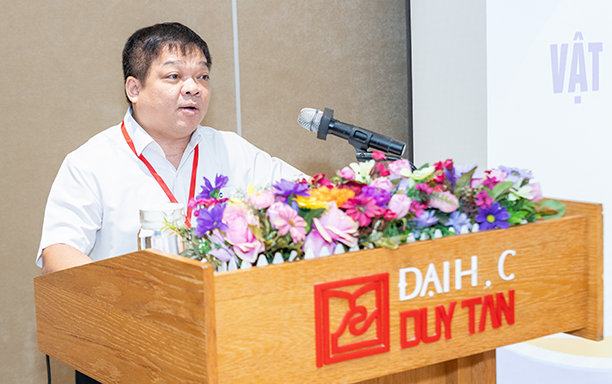
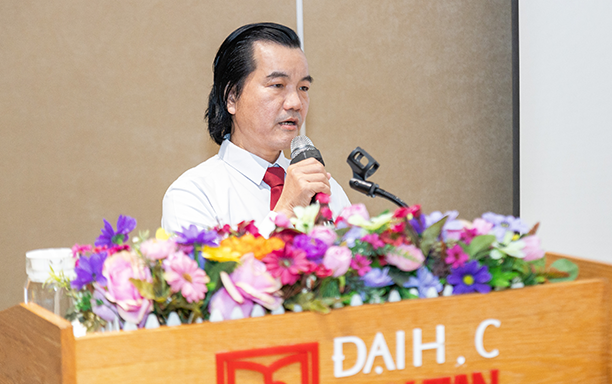
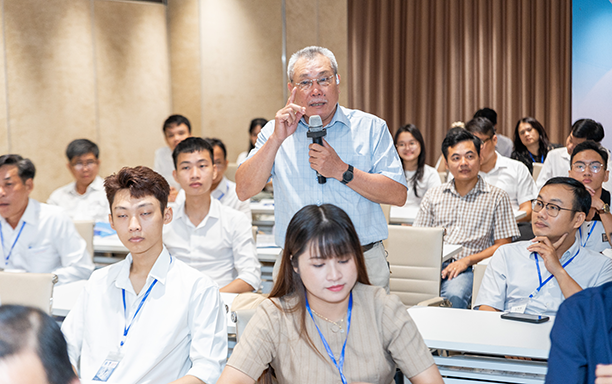
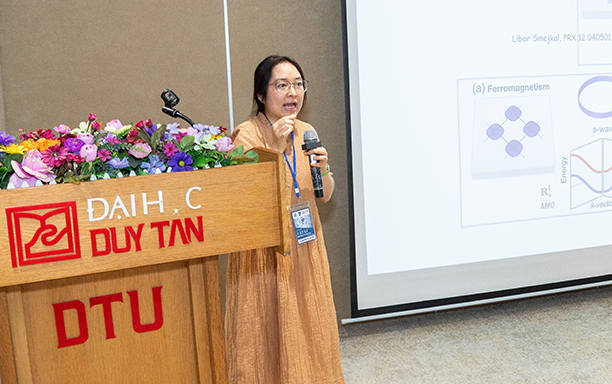
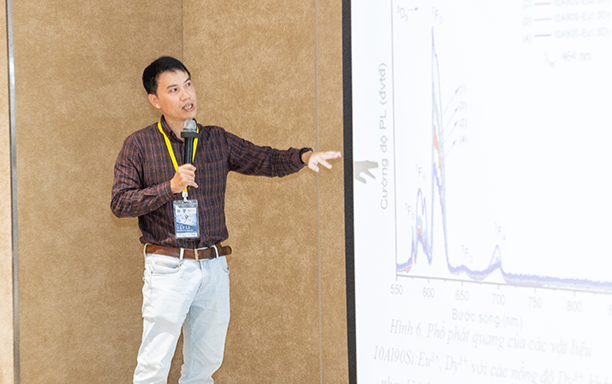
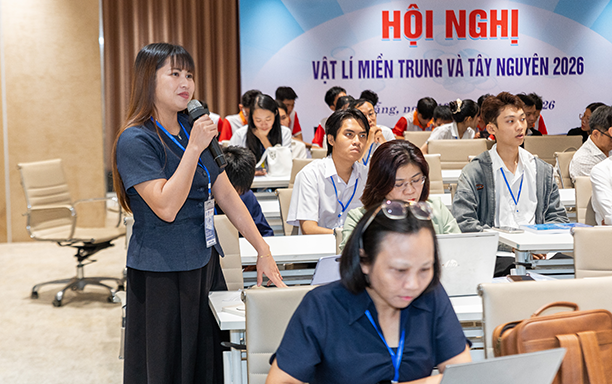
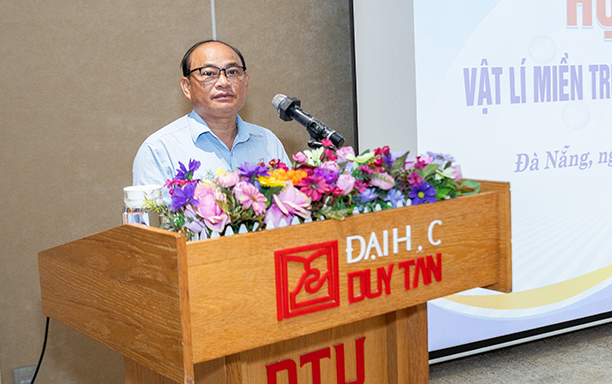
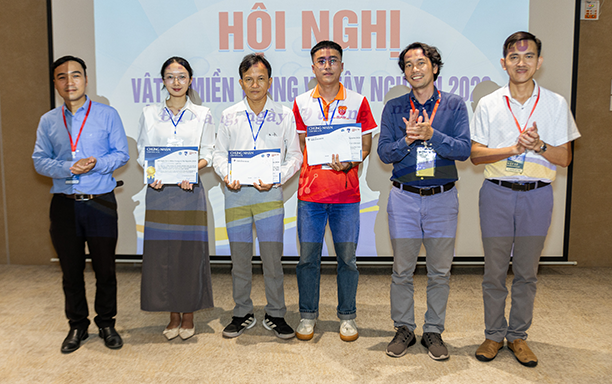
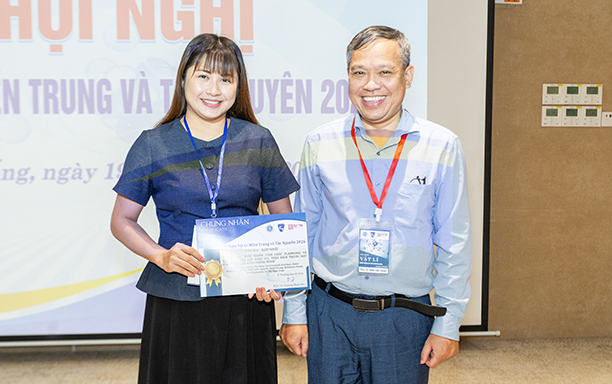
On September 19, 2026, Duy Tan University (DTU), in collaboration with the Hue City Physics Association - an affiliate of the Vietnam Physical Society - the University of Sciences, Hue University, the International Center of Physics under the Vietnam Academy of Science and Technology, and several leading universities in the region, organized the “2026 Physics Conference for Central Vietnam and the Central Highlands.”
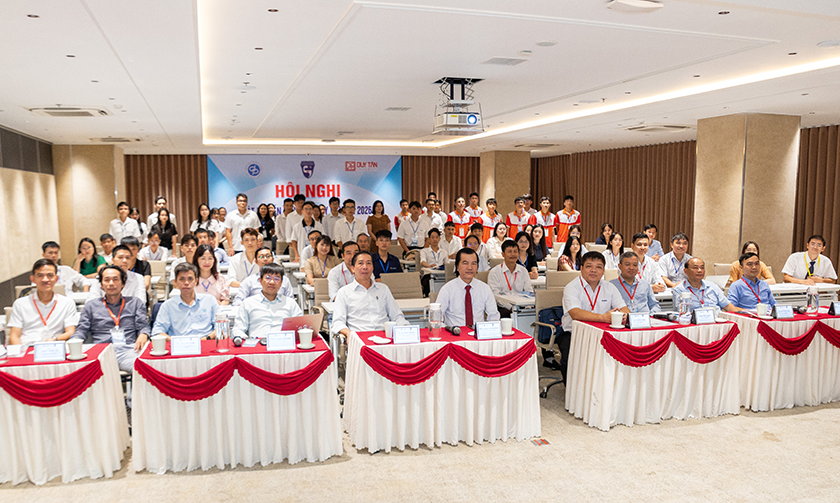
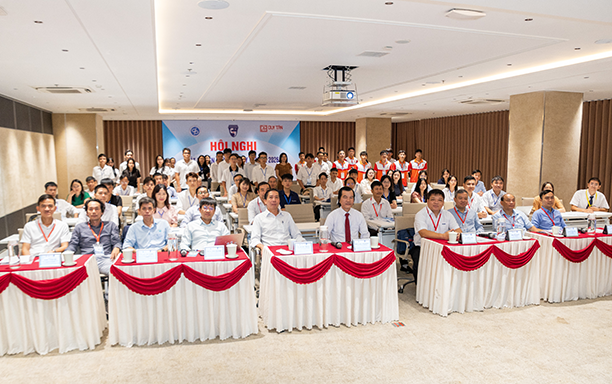
The 2026 Physics Conference for Central Vietnam and the Central Highlands attracted a large number of scientists,
lecturers, doctoral candidates, master’s students, and undergraduate students from across the country
Building on the success of the annual Hue City Physics Conference series, which was launched in 2016, the conference aimed to enhance the quality of scientific research, technology transfer, and teaching. It also served as a prestigious academic forum that contributed to the implementation of the Physics Development Program through 2030, as approved by the Prime Minister, while promoting international integration.
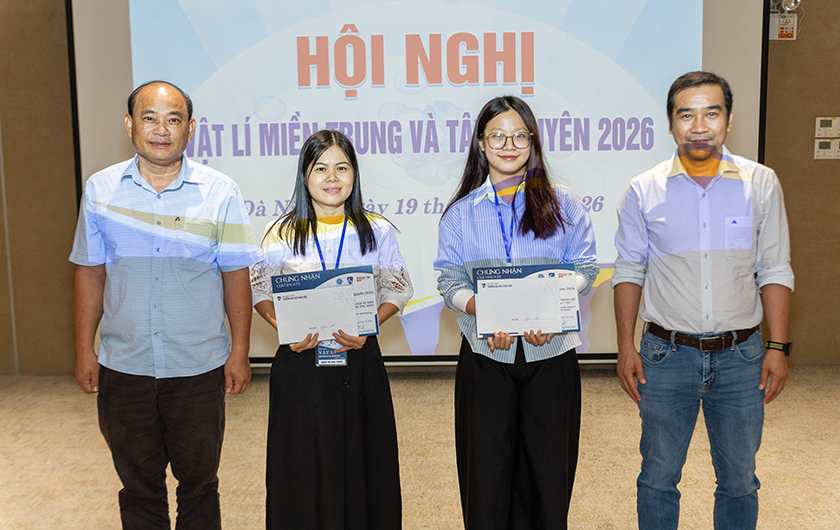
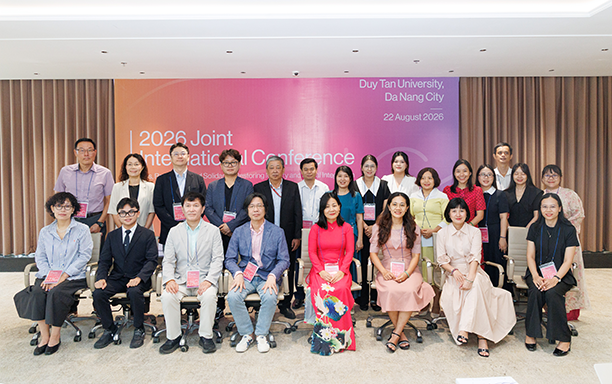
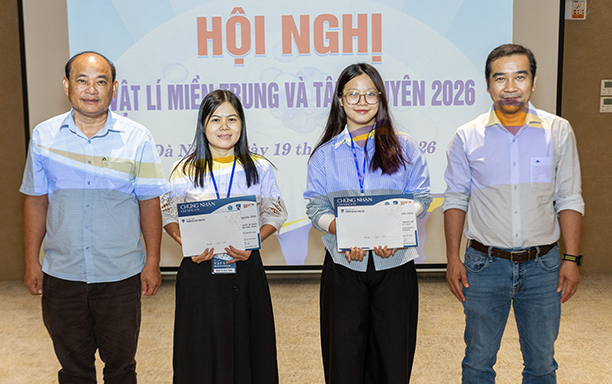
The Conference Organizing Committee presented certificates to the speakers
The conference attracted scientists, lecturers, doctoral candidates, master’s students, and undergraduate students from numerous universities, colleges, and high schools across the country. The studies presented and published in this year’s conference proceedings covered a wide range of key fields, including physics, environmental science, materials technology, nanotechnology, teaching methodologies, mechanical engineering, electrical engineering, and automation. All papers underwent a rigorous scientific peer-review process. Featured research topics included:
- The emergence of altermagnetism induced by the double-exchange mechanism on a Lieb lattice;
- Simulation of a hybrid variational quantum algorithm on a qubit–qumode architecture for solving the quantum Rabi model;
- Development of a ChatGPT-assisted Python programming workflow for simulating physics learning materials;
- Nano@QNU-ASMD materials: From laboratory research to practical applications;
- Application of YOLOv8 to footwear recognition on the UGOT robotic platform.
DTU also contributed two studies published in the conference proceedings. The first, entitled “Design and Emergent Properties of Two-Dimensional Janus Materials: A Computational Design Study,” was conducted by Prof. Dr. Nguyen Ngoc Hieu from DTU’s Institute for Research and Development of Advanced Technology.
Using first-principles calculations based on density functional theory (DFT), the study analyzed the materials’ structures and thermodynamic stability and identified distinctive physical phenomena, including giant Rashba spin splitting and exceptional piezoelectric properties. The findings open up promising avenues for the development of low-power nanoelectronic devices and spintronic technologies.
The second study investigated the optical properties of co-doped glass fabricated using the sol–gel method. It was conducted by researchers from DTU’s Faculty of Environmental and Natural Sciences and Institute for Research and Development of Advanced Technology, in collaboration with Le Quy Don High School for the Gifted in Khanh Hoa Province.
The researchers successfully fabricated singly doped and co-doped aluminosilicate glass samples. They also observed the partial self-reduction of copper dopants in air without the use of a reducing gas and broadened the tunable range of emitted colors by combining red, green, and yellow emissions. These findings show significant potential for applications in lighting technology and luminescent materials.
The success of the 2026 Physics Conference for Central Vietnam and the Central Highlands further affirmed DTU’s position as a dynamic academic destination committed to advancing fundamental research and high-tech applications in close connection with educational quality and collaborative development.
(Media Center)
Other News