Duy Tan Dream
General Secretary and President To Lam has repeatedly emphasized that the development of science, technology, innovation, and the national digital transformation is the most important driver of national development. It strengthens competitiveness, gives the country gradual mastery of strategic technologies, and positions Vietnam for success in the digital era.
Guided by this vision, mastering core technologies, developing a highly-quality workforce, and building an innovation ecosystem have become urgent strategic tasks for local governments, businesses, and higher education institutions.
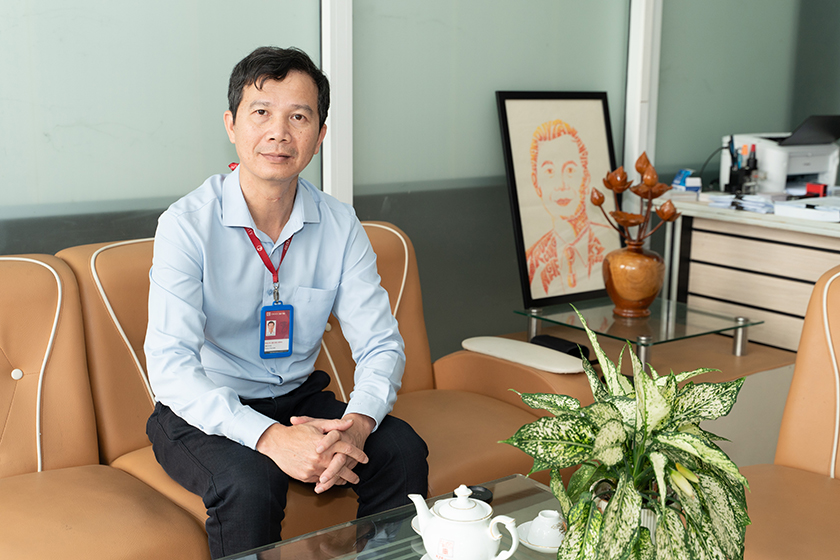
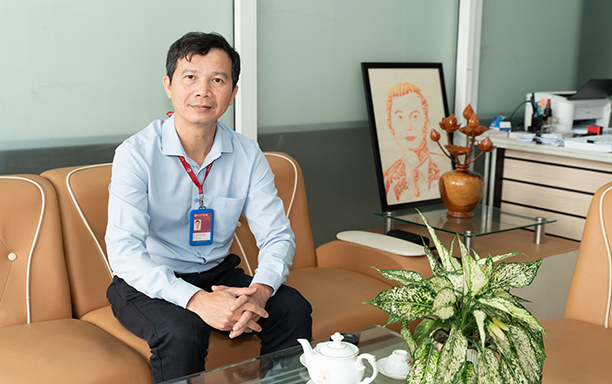
Assoc. Prof. Dr Ha Dac Binh, acting Rector of the DTU School of Engineering & Technology
Assoc. Prof. Dr Ha Dac Binh, acting Rector of the School of Engineering & Technology (SET) at Duy Tan University (DTU), shared his insights on the role of universities in the realization of this vision with a reporter from the Van Nghe newspaper.
As science & technology have been recognized as a key driver of economic growth and national development, could you share your views on the opportunities and significance of science & technology development for Vietnam today?
Development in science & technology in Vietnam currently has strong momentum and has received significant attention from Party and government. A lot of strategies and policies have been issued to foster innovation and the adoption of hi-tech, and strengthen the nation’s competitiveness.
In my view, scientific research and technological development form the foundation for breakthroughs in knowledge and technology. They enable Vietnam to gradually master core and strategic technologies such as artificial intelligence, quantum technology, and semiconductor technology. Beyond enhancing the country’s long-term competitiveness, they contribute to national defense and security while helping safeguard Vietnam’s sovereignty in the increasingly complex global landscape.
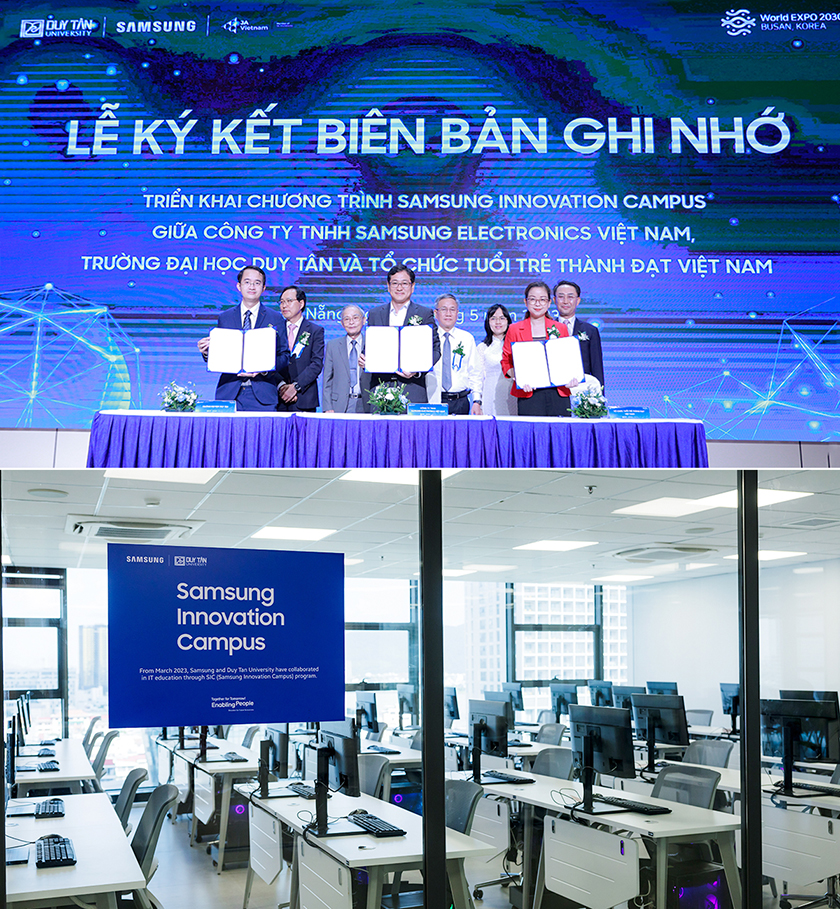
DTU signed an agreement with Samsung and received a computer practice room for training programs in artificial intelligence
- In response to this, what specific action has the DTU School of Engineering & Technology undertaken to help advance science & technology?
We consider scientific research to be one of the university’s core missions. Currently, the School of Engineering & Technology has two research projects funded at national level by NAFOSTED:
“Research on solutions to improve the performance of wireless internet of things (IoT) networks integrating sensing, communications, and computing”, and
“Research and manufacture of an improved semi-active prosthetic leg integrated with artificial intelligence for above-the-knee amputees”.
Through these research projects, we not only generate valuable scientific outcomes but we also train young researchers and build strong research teams with the capabilities for international integration.
The School also places the highest priority on training and research-capacity building. We currently offer three PhD programs: Solid State Physics, Theoretical & Mathematical Physics, and Atomic & Nuclear Physics.
These are important foundational disciplines for the developmental vision in quantum technology.
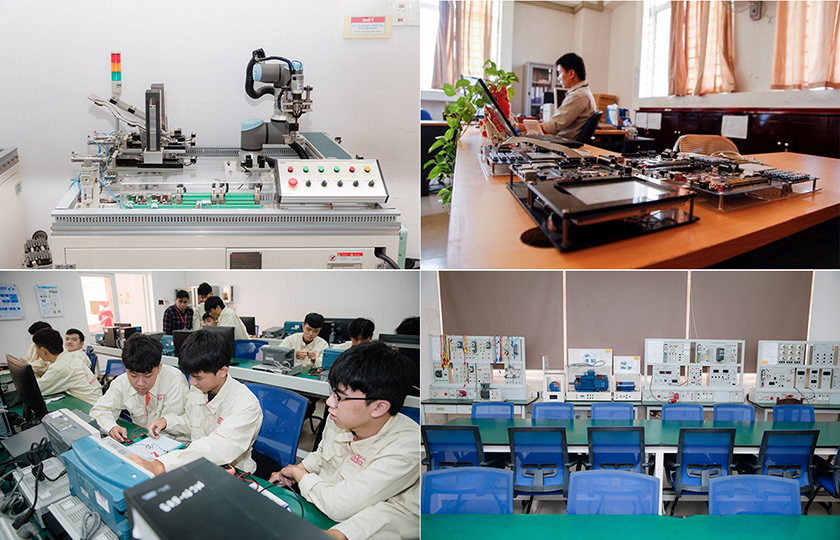
DTU students have access to extensive spaces for hands-on learning where they can develop practical products on campus
Our PhD supervision furthermore focuses on research areas aligned with the strategic technology priorities, including artificial intelligence, virtual-reality systems, edge computing, quantum machine learning, next-generation mobile networks (B6G, 6G), robotics, cybersecurity, and aerospace technology.
Our research publications are likewise aligned with the eleven strategic technology groups, to improve research quality and capacity for international integration.
The university has been establishing partnerships with numerous international organizations. We also regularly hold seminars, conferences, and workshops, and we invite leading experts from Vietnam and abroad to deliver specialized lectures on topics related to the eleven strategic technology sectors.
- We understand that the university is in the process of establishing a Quantum Technology Center. Why has the university chosen this field as a strategic priority?
Quantum technology is widely regarded as one of the breakthrough fields for the 21st century. It has the potential to comprehensively reshape computing, communications, and cybersecurity while serving as a critical foundation for technological competitiveness and self-reliance among nations. Many developed countries are making substantial investments in this area.
The School of Engineering & Technology has written a proposal to establish a Quantum Technology Center, with research priorities including quantum computing & communications, quantum machine learning, quantum networking, quantum key distribution, physical-layer security, 6G networks, artificial intelligence for quantum computing, and quantum data security.
We expect the Center to serve as a foundation for educating highly qualified people while developing Vietnam’s future research capabilities in quantum technology.
- At the undergraduate level, how has the university prepared for training manpower for these strategic technology fields?
We are pursuing several solutions simultaneously. At the postgraduate level, topics related to the eleven strategic technology sectors have been integrated into academic programs and research topics. Coursework on quantum computing has also been incorporated into advanced-knowledge modules.
At the undergraduate level, the university has strengthened instruction in applied mathematics, introduced additional courses in artificial intelligence, revised programming courses to emphasize AI applications in embedded systems, and incorporated discussions of ethics in the AI era into the curriculum.
DTU students have quickly embraced this AI-integrated curriculum and have developed a number of highly practical real-world applications and projects. One notable example is AgenTex v1.0, a multi-agent AI system for scientific research, which was launched on May 17, 2026. AgenTex v1.0 is built on a multi-agent AI architecture of five system layers and an ecosystem of nine specialized AI agents, operating synchronously through a single web interface. The platform was designed as an end-to-end research support system that improves the quality of international publications and fosters innovation in the academic environment.
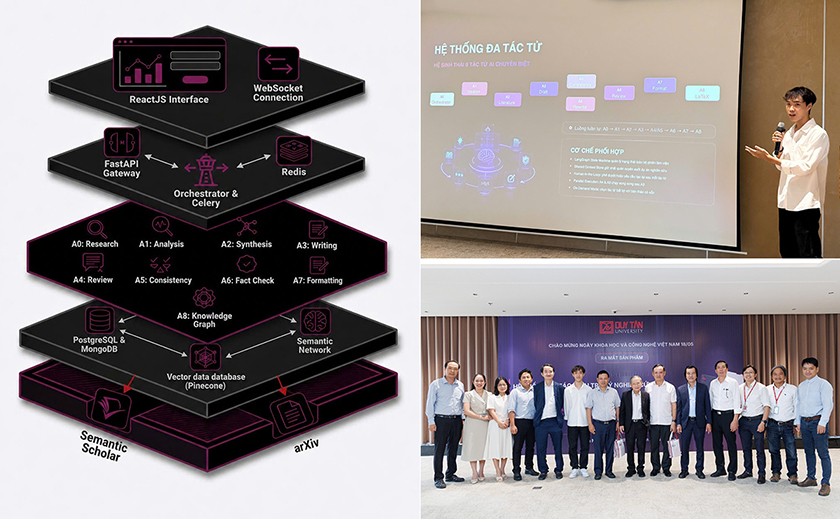
Launch of the AgenTex v1.0 pilot for scientific research
Lecturers and staff at the Center for Mechanical Engineering of the DTU School of Engineering & Technology are also in the final stages of the development of an “AI-powered intelligent service robot for delivery of goods”. It’s being developed to address practical needs at hotels in Danang, where tasks like delivery and receipt of supplies, towels, drinking water, and documents between departments remain repetitive and labor-intensive. The robot is equipped with AI for environmental perception, safe navigation, and autonomous indoor transport, which will reduce workload, improve efficiency, and contribute to the modernization of hospitality services.
- In your view, what challenges does Vietnam face in achieving its goal of becoming a hi-tech leader, and what priorities should the country focus on in the years ahead?
Vietnam is facing many opportunities to make breakthroughs in science & technology, but it also faces a number of challenges. Foremost is the shortage of highly qualified talent. The current number of experts and engineers with advanced expertise in strategic technology fields remains insufficient for the country’s rapid development. In addition, investment in research & development has yet to match potential and practical requirements. We need even more state-of-the-art laboratories, large-scale research centers, and sufficiently strong financial-support programs. At the same time, hi-tech infrastructure and the broader innovation ecosystem must continue to be strengthened to meet the demand for future growth.
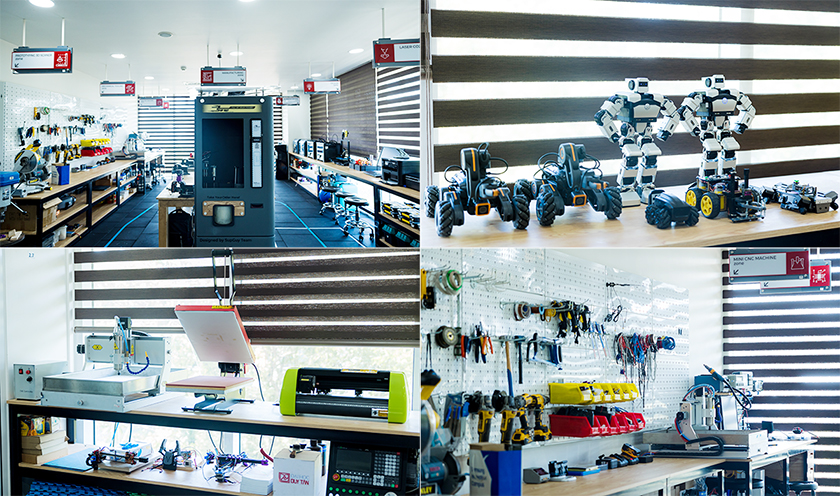
STEM laboratory and FAB Lab at DTU
We need to implement multiple and coordinated solutions. STEM education at senior high and up plays an important role in building a long-term workforce for the country. Policies should also provide greater support for students in science & technology disciplines and increase investment in key laboratories and in fundamental and applied research. Developing strong research groups at universities, attracting international experts, strengthening intellectual-property protection, and fostering closer collaboration between government, industry, and education institutions will narrow the gap between research and applications. This will create motivation for the strong development of science, technology, and innovation in the years ahead.
Vietnam already possesses many important advantages, such as its strategic geographic location, an increasingly robust digital infrastructure, a large and young workforce, and the strong commitment of Party and government to the development of science, technology, and innovation. Building on this, many localities - such as Danang - are creating vibrant innovation ecosystems that bring together businesses, universities, and startup support organizations. I’m confident that these favorable conditions will enable Vietnam to continue its rapid progress and steadily strengthen its position both regionally and globally.
- Thank you very much!
(Interview by Pham Ha)
Other News