Undergraduate
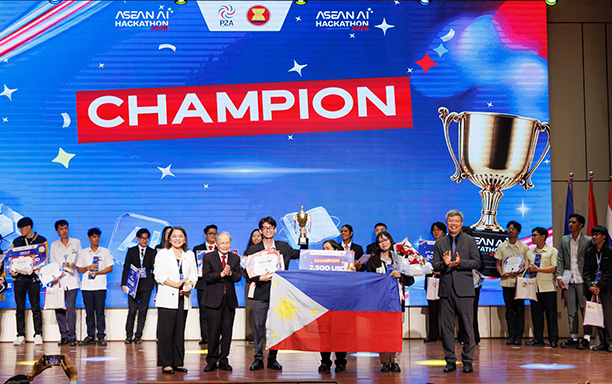
After three days of competition, 16 ASEAN student teams unveiled artificial intelligence (AI) solutions designed to address challenges involving natural disasters, healthcare, transportation, energy, and education during the finals in Da Nang.
On August 21, the Passage to ASEAN Association (P2A), in collaboration with Duy Tan University (DTU), held the finals and awards ceremony of the ASEAN AI Hackathon 2026 (AAIH 2026) in Da Nang. Ho Quang Buu, Vice Chairman of the Da Nang People’s Committee, attended the event.
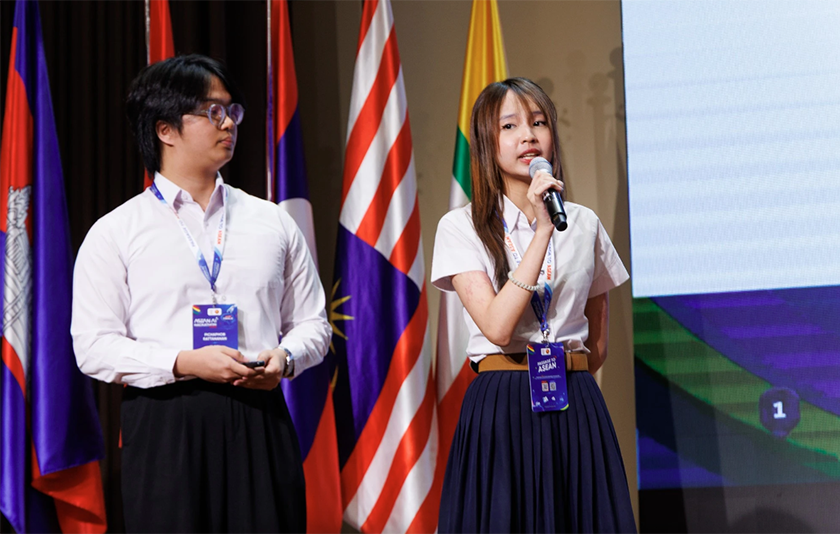
A team representative presents an AI solution to the judging panel. Photo: Ngoc Han
AAIH 2026 took place from August 19 to 21 as part of a series of activities celebrating ASEAN Month. The competition attracted more than 240 teams comprising over 1,000 students from more than 110 universities across nine ASEAN countries. Following four months of preliminary and semifinal competition, the 16 top-performing teams were selected for the finals in Da Nang.
The finalists came from Vietnam, Thailand, Malaysia, Indonesia, Singapore, the Philippines, and Cambodia. Vietnam was represented by two teams- one from Duy Tan University and the other from Dong Nai Technology University.
In the finals, each team had 20 minutes to give a presentation, demonstrate its product or show a project-introduction video, and respond directly to questions and critiques from the judging panel. A solution’s feasibility, applicability, and practical value were considered just as important as its technological sophistication.
Over three days of competition, the 16 teams from seven ASEAN countries showcased AI-powered solutions to real-world problems, contributing to the vision of an innovative, sustainable, and people-centered ASEAN.
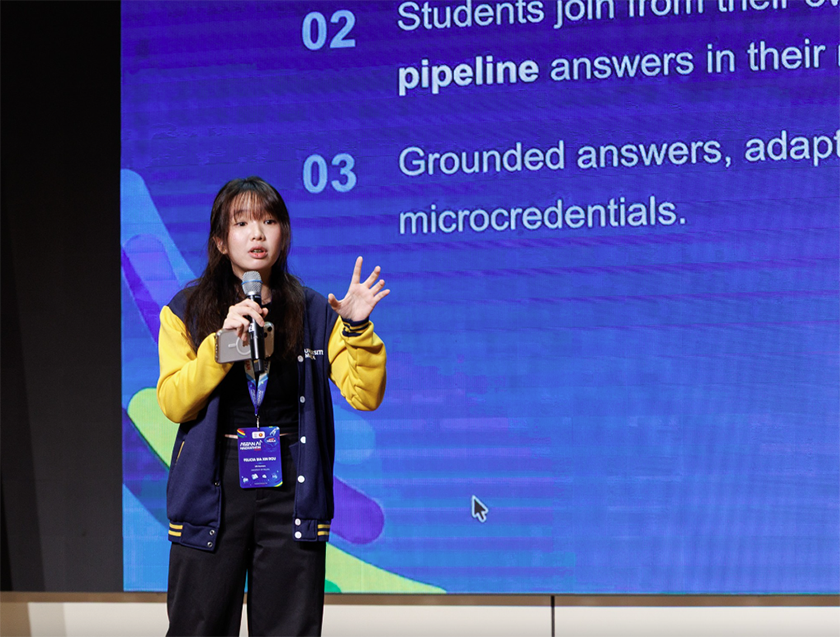
A contestant responds to questions from the judging panel following the project presentation. Photo: Ngoc Han
The projects focused on four major areas: developing intelligent natural-disaster warning and response systems amid climate change; enabling remote disease diagnosis in areas with limited access to healthcare; optimizing transportation and energy use for smart cities; and personalizing learning pathways in education.
A notable feature of the competition was that teams were required to go beyond proposing ideas and develop their products through multiple stages - from initial concepts and prototypes to working demonstrations. Before the finals, the teams also participated in workshops led by experts in AI, engineering, innovation, presentation skills, and product commercialization.
AAIH 2026 was held under the theme “AI for a Resilient ASEAN: Innovation, Sustainability, and Humanity,” encouraging students to use technology to address the region’s shared challenges.
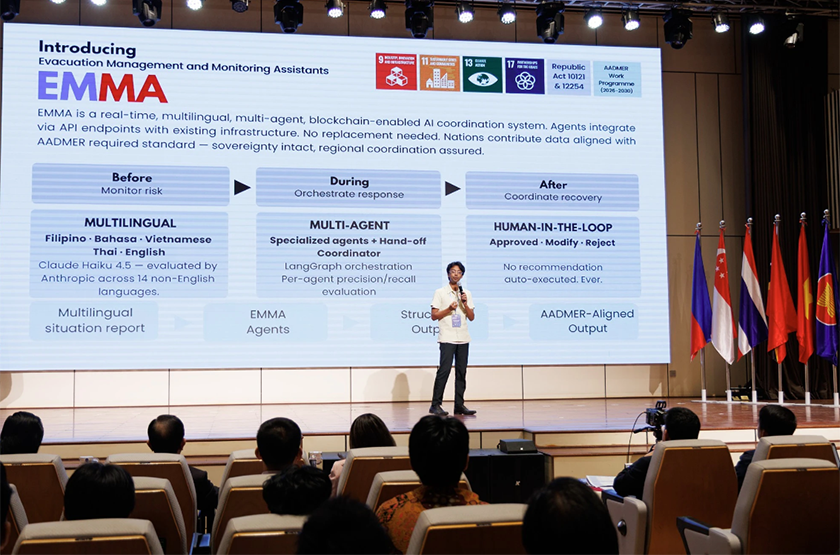
The AI solutions address real-world challenges across the ASEAN region. Photo: Ngoc Han
Dr. Le Nguyen Tue Hang, Director of the Passage to ASEAN (P2A) Secretariat and DTU Vice Provost, said AI is no longer a matter of the future; it is already here, transforming industries and reshaping society.
“The real question is: Who will shape AI? And the answer is very clear-it is you, the students,” Dr. Hang said.
According to Dr. Le Nguyen Tue Hang, when guided by ethical values, a humanitarian spirit, and regional cooperation, AI can help address ASEAN’s most pressing challenges, from sustainable development and climate-change adaptation to economic growth and digital equity.
The judging panel for the finals brought together experts in AI, technology, research, innovation, and commercialization from several countries.
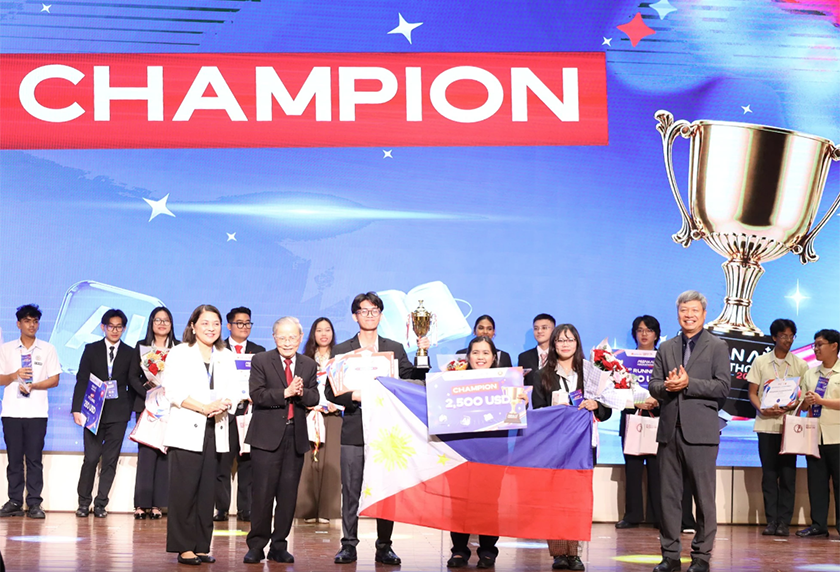
The organizers present the first prize to CIT-U Shane-nanigans from the Philippines. Photo: Ngoc Han
CIT-U Shane-nanigans from the Philippines won first prize. Two second prizes went to UI-WICARA ASEAN from Indonesia and UM-Gunners from Malaysia. Third prizes were awarded to PUPQ-Hackbigans from the Philippines, DTU-AEGISFLOW AI from Duy Tan University in Vietnam, and CU from Thailand.
(Media Center)
Other News