From January 8-9, 2026, the workshop “Human Adaptive Cyber-Physical Systems (HACPS): Advancing Smart and Sustainable Technologies” was held at DTU. The event, organized by DTU and Edinburgh Napier University (UK) in a hybrid format (in-person and online), attracted a large number of scientists, experts, and representatives from six prestigious universities in the UK and Vietnam. It was supported by the British Council and the Vietnamese Ministry of Science & Technology.
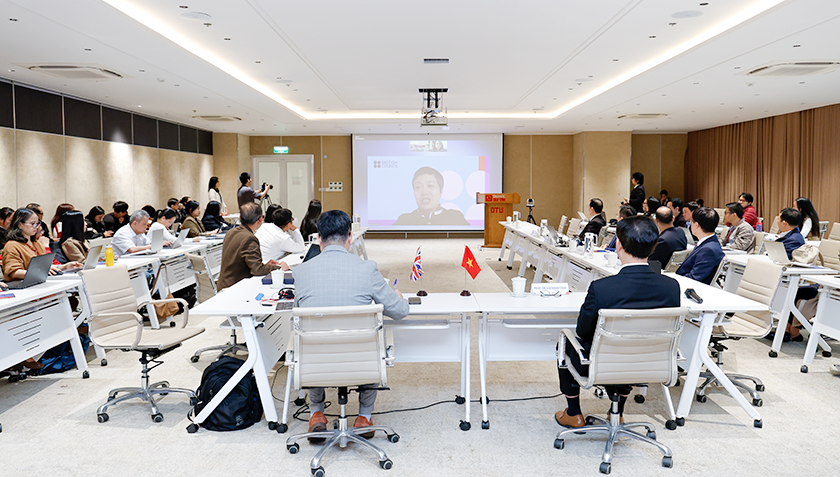
The HACPS workshop attracts a large number of scientists, experts,
and representatives from six prestigious universities in the UK and Vietnam
Over two days, in-depth discussion sessions focused on three strategic areas:
- digital health & AI,
- advanced manufacturing,
- AI & smart transportation.
These themes align with Vietnam’s development orientation for higher education as well as with the innovation strategy in digital technologies and sustainable development of the UK. Through exchange sessions, the workshop opened up numerous opportunities for scientific research collaboration, human resource development, and curriculum innovation - toward human-centered technology models in the context of Industry 5.0.
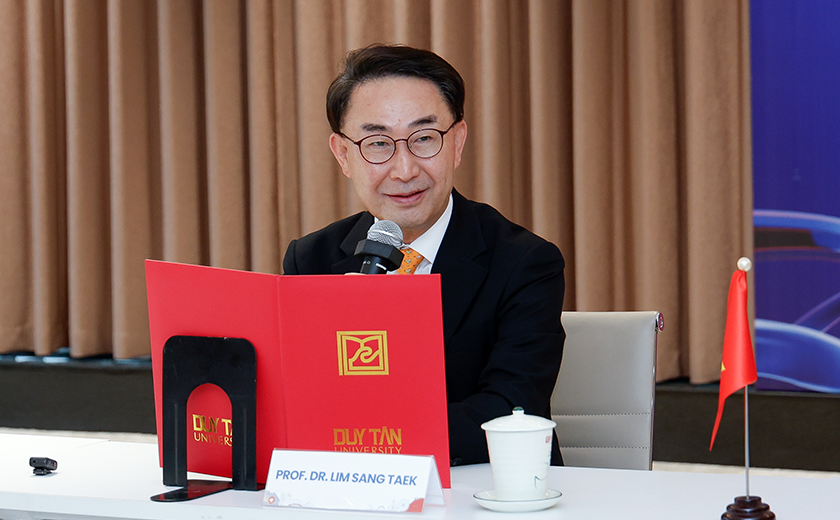
DTU Vice - Provost Prof. Dr Lim Sang-taek speaking at the event
“International cooperation and global integration have always been strategic pillars in DTU’s development orientation,” DTU Vice Provost Prof. Dr Lim Sang-taek emphasized. “We are proud to co-organize this HACPS workshop and promote sustainable cooperation between the UK and Vietnam in emerging, human-centered technologies. The workshop has three main objectives: strengthening and formalizing the cooperation framework among the partners; developing a joint cooperation roadmap for 2026 -2028; and together preparing phase-2 cooperation proposals under the iTechPath program.”
In the first session on Digital Health & AI, the focus was on applying HACPS and AI to enhance the efficiency of the healthcare systems of Vietnam and the UK. Opening the session, Dr Nguyen Van Tuan (DTU College of Medicine & Pharmacy) presented research on AI applications in medical imaging diagnosis, telemedicine, and clinical decision support. This reduces the healthcare access gap between urban and rural areas. The presentations also addressed challenges related to legal frameworks, ethics, data security, and AI infrastructure investment in healthcare.
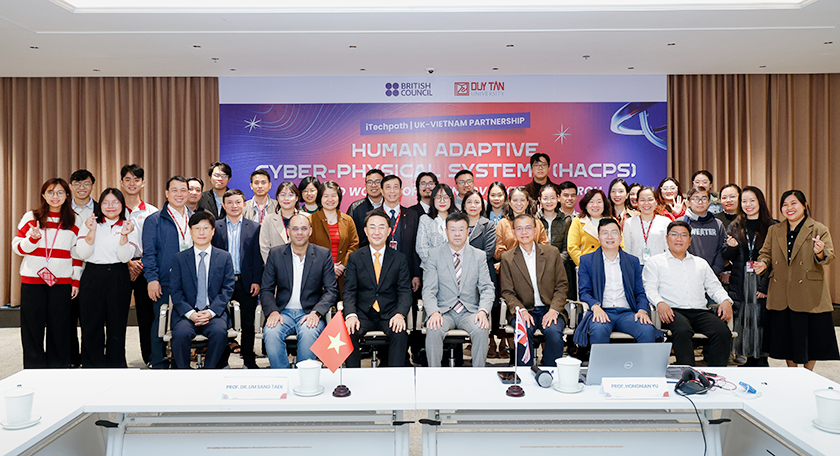
DTU affirms its position as a prestigious destination in academia and serves
as a bridge for international education and research cooperation toward sustainable development
The second session on Advanced Manufacturing explored the future of manufacturing in the context of Industry 5.0, with a keynote presentation by Prof. Anand Nayyar, Vice Chairman for Research and Director of DTU’s IoT & Intelligent Systems Laboratory. The presentations highlighted the role of intelligent systems, robots, and AI in enhancing efficiency, sustainability, and the human factor in modern manufacturing.
Building on the academic content, the workshop also focused on strategic orientation and the sustainable development of a UK-Vietnam HACPS Network. This culminated in the Strategic Planning Session, which aimed to develop the HACPS Cooperation Roadmap for 2026–2028 and at agreement on the UK-Vietnam Joint Position Paper, paving the way for a phase-2 cooperation proposal under the UK -Vietnam iTechPath program. This discussion session was co-chaired by Prof. Hongnian Yu (Edinburgh Napier University) and Dr. Hong Soon-goo (DTU).
The third session on AI & Smart Transportation saw discussion on the application of adaptive AI, cyber-physical systems, and smart transportation solutions for safer, more efficient, and sustainable transportation systems, while also opening opportunities for pilot projects within the HACPS network.
In parallel, the recording of a HACPS virtual classroom was an important academic output of the project. The recorded lectures are developed into open online classes to support teaching, training, and capacity building for learners in Vietnam, the UK, and international partners.
The organizers highly appreciated the outcomes achieved and reaffirmed their commitment to further expanding and deepening research and training cooperation between UK and Vietnamese partners in the near future. Through the co-organization of the HACPS workshop, DTU affirms its position as a prestigious destination in academia and serves as a bridge for international education and research cooperation toward sustainable and human-centered development.
(Media Center)