Undergraduate
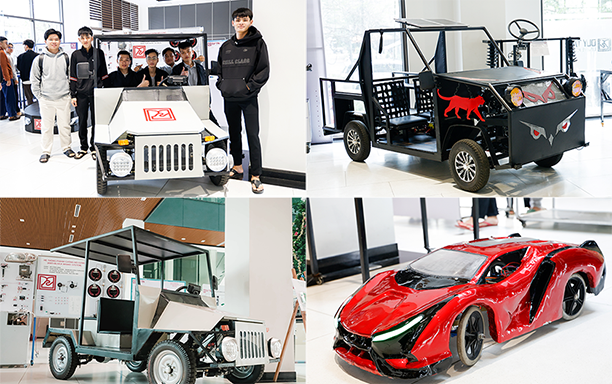
Going beyond technical drawings, DTU students, through their Graduation Projects and course assignments, have actively focused on turning their academic work into practical applications, transforming design ideas into real-world models and products across various disciplines, including Architecture and Automotive Engineering Technology.
Notably in the field of Architecture, this year visiting lecturer Dr. Architect Tran Gia Viet My from the University of Hawai?i (USA) provided guidance and shared practical professional experience. His involvement helped students turn their ideas into reality and prepare them for real-world application.
A Lecturer from the University of Hawai?i helps DTU students apply Digital Technology in modern library design
This year, the final course project for Architecture students focused on solving a design challenge entitled “Design of the Da Nang General Library.” The library, with a total floor area of approximately 3,000 square meters, is intended to serve the learning and research needs of Da Nang residents, while also shaping a cultural exchange space and a hub for community knowledge sharing.
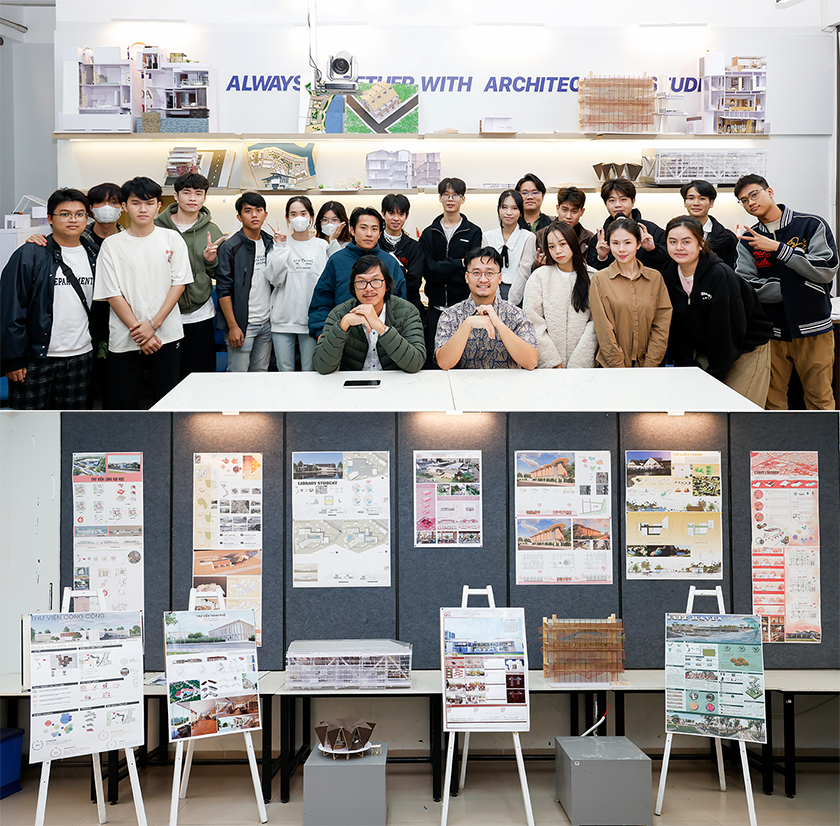
Dr. Arch Tran Gia Viet My from the University of Hawai?i, USA (second from the left in the front row),
during the final project evaluation session at DTU
On December 18, 2025, Dr. Architect Tran Gia Viet My from the University of Hawai?i (USA) directly guided and evaluated course projects at DTU. He has taught and supervised several architecture design studios, including:
- Basic Design Studio 2,
- Civil Architecture Studio 4, and
- Advanced Design Studio.
Currently a co-owner of Studio Ki?owao in Honolulu and founder of My Tran Studio, Dr. Tran applies international evaluation standards in his teaching at DTU. He noted that DTU students adapt quickly and demonstrate strong potential when trained within a rigorous academic framework.
“Graduation projects of Architecture students in the United States are evaluated based on their ability to integrate multiple elements, including design thinking, contextual research, spatial organization, architectural solutions, basic structural and material systems, as well as presentation and argumentative skills. From the moment I began teaching and supervising course projects at DTU, I have applied these criteria to help students approach and adapt to the highest standards of architectural education worldwide. In practice, DTU students have adapted very quickly and have effectively acquired new knowledge and skills within a short period of time. This demonstrates the great potential of young students when they are placed within a clear and rigorous academic framework,” Dr. Architect Tran Gia Viet My shared.
Throughout the supervision process, Dr. Arch. Tran Gia Viet My consistently encouraged students to ask questions, share their perspectives, and engage in ongoing critique to refine the most suitable design solutions for the library.
The learning process is therefore conducted around an “open studio” model, in which each project becomes an academic dialogue. This approach helps students develop independent thinking, proactive reasoning, and the ability to defend their ideas in response to diverse perspectives - skills that are essential in an International architectural training environment.
In recent years, inviting international lecturers to teach and supervise design projects has been a regular practice in DTU’s Architecture programs. This approach provides students with frequent opportunities to engage with contemporary design thinking, global architectural trends, and hands-on professional experience in a multicultural learning environment.
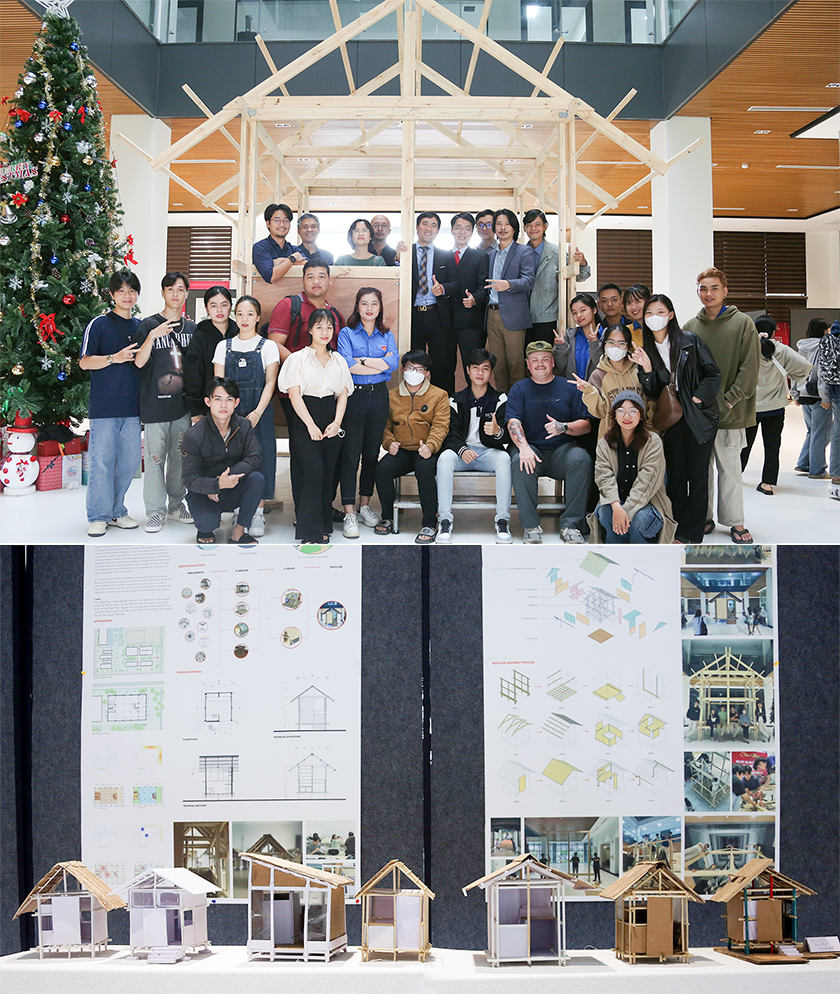
The “Tropiceering Vietnam” Exhibition at DTU
In 2024, while supervising course projects, Dr. Architect Tran Gia Viet My collaborated with the Faculty of Architecture to organize a unique exhibition titled “Tropiceering Vietnam” at DTU. The exhibition showcased a diverse range of models, drawings, and architectural projects specifically designed to suit the terrain, climate, and environment of Da Nang city, as well as the tropical region more broadly. A 1:1 scale design and construction model created by second-year Architecture students at DTU became a highlight of the exhibition and received high praise from both guests and professors from the University of Hawai?i.
Automotive models from DTU Graduation Projects successfully tested and fully operational
More than 30 model-based products created by student teams from the Automotive Engineering Technology program were showcased at Building G, Duy Tan University on December 22nd. These products were developed from research topics undertaken as part of the students’ final-year graduation projects.
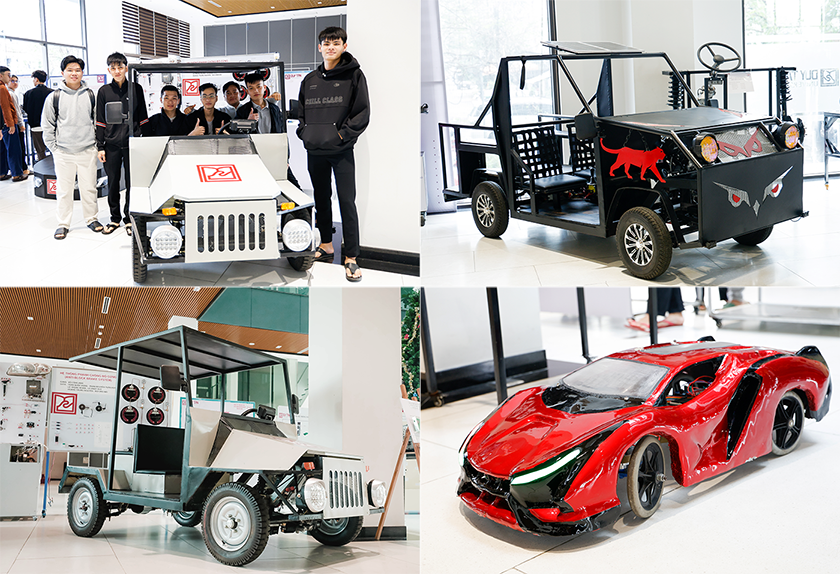
Model projects from the Graduation theses of DTU Automotive Engineering students
Notably, all of DTU students’ car models are fully operational. They were designed and built based on real automobile structures, featuring complete chassis, drivetrain, and steering mechanisms. Not only meeting the academic requirements of their projects, the models also demonstrate high practical applicability, reflecting the creativity, research abilities, and hands-on skills of DTU Automotive Engineering Technology students.
“Graduation projects closely tied to real-world products are a distinctive feature of DTU’s training approach. By directly constructing tangible products, students gain early opportunities to apply theoretical knowledge in practice, enhance their research, design, and problem-solving skills, and further develop teamwork and creative thinking,” said Associate Prof. Dr. Vu Cong Ham, Head of the Faculty of Mechanical Engineering, DTU School of Engineering & Technology (SET).
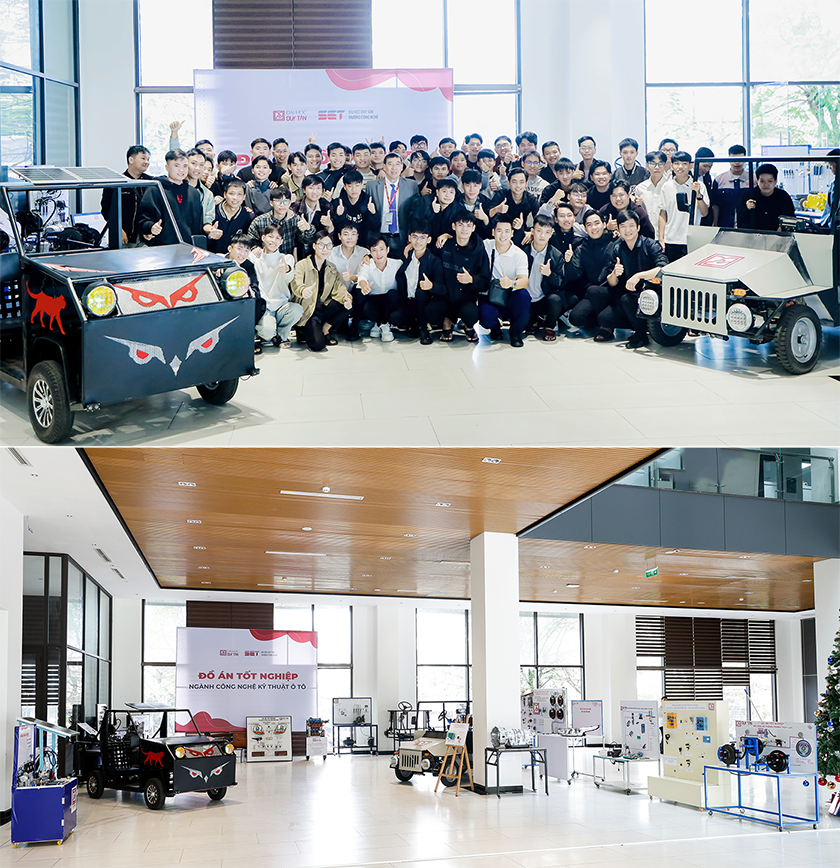
DTU lecturers and students
Le Truong Truc, a student of Automotive Engineering, said: “In response to the growing environmental pollution, particularly air pollution, we chose to undertake a project on Electric Vehicle Manufacturing with the goal of creating a daily transportation solution that also helps reduce emissions and protect the environment. While carrying out our graduation project, we received dedicated guidance from our instructors, which helped us reinforce our professional knowledge and gain practical skills such as welding, grinding, cutting, and turning, all essential for our future careers.”
The Automotive Engineering Workshop at DTU, with a total investment of approximately 20 billion VND, currently comprises five labs:
- Engine Lab
- Automotive Mechanics Lab
- Automotive Chassis Lab
- Automotive Electrical Lab
- Automotive Laboratory and Advanced Technologies
The workshop is equipped with a wide range of training equipment, including engines and gearboxes from Toyota and Hyundai (sourced from Japan and Korea), tools imported from Beta (Italy), and precision mechanical testing devices from Germany. These facilities provide optimal hands-on learning opportunities for DTU Automotive Engineering students right on campus.
Currently, the Architecture - Construction and Mechanical Engineering fields at DTU have ranked highly in global rankings over the years, specifically:
- Top 201-275 in Civil & Structural Engineering and Top 401- 450 in Mechanical, Aeronautical & Manufacturing Engineering according to QS World University Rankings by Subject 2025,
- Top 151-200 in Civil Engineering and Top 151-200 in Mechanical Engineering according to Shanghai Rankings by Subject 2025,
- Top 301 - 400 in Civil Engineering and Top 301- 400 in Mechanical & Aerospace Engineering according to Times Higher Education World University Rankings by Subject 2025
(Media Center)
Other News