Undergraduate
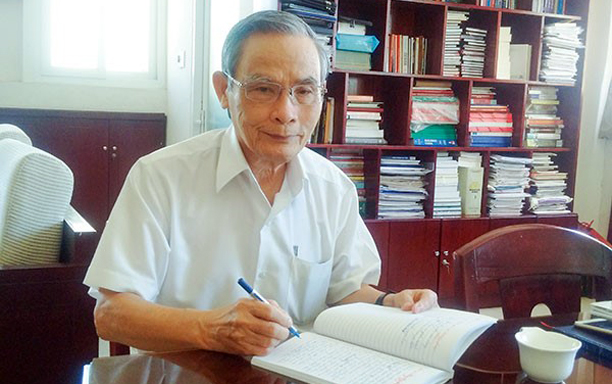
At a press conference to mark the new school year, Minister of Education and Training Phung Xuan Nha bluntly pointed out that “the standard of our national higher education system is still most alarming.” Critical issues are overly autonomus control and enrollment procedures, the low quality of university lecturers, the explosion of choices of majors and the failure of universities to balance workforce supply with demakforce, leaving thousands of graduates unemployed.
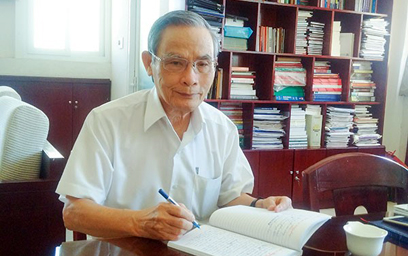
Distinguished Teacher Le Cong Co, DTU President and Provost
- For this new school year, the Ministry of Education and Training (MOET) set nine key missions and five basic solutions to continue the fundamental and comprehensive reformation of education in Vietnam. However, what do you think the first step should be to improve quality?
- I always believe that educational reformation must start with the teachers. A teacher should be a trainer, a guide and a role-model for the students.
Traditionally, we all respected monks and teachers, who were always held in high esteem, but nowadays the status of teachers is fading, sometimes even to the point of disdain. At the same time, the teaching profession has received much less attention than before. To redefine the role of teachers in our society and boost their spirits, we must improve teaching and research methods and materials and find ways of attracting talent and brainpower externally to steadily improve the standard of education at our current tertiary institutions.
- This year, for the first time, many famous universities did not meet the basic standards. The MOET believes that this must be a time for introspection. Universities randomly set their own enrollment standards, with no regard to labor market requirements. What are your main concerns about university education?
- My concern is that our current tertiary education system is not keeping up with the current capacities of the population or current development trends. The standards of our educational programs, lecturer expertise and hard and soft skills are all a lower than in many other countries. If education and training cannot keep up, scientific and technological development cannot go forward. This is why the products we use here everyday are still developed in foreign universities, not in Vietnam. So we should therefore encourage and motivate the broadening of the educational system in Vietnam.There is currently still no centralized, common management system for universities and colleges, except in defense and security, across the entire country.
Furthermore, there is still no cohesion between universities and businesses in training, recruitment, and research. One reason for this is that most businesses in Vietnam are small or medium-sized and do not have the financial resources or the motivation to actively involve themselves in university activities. Finally, with the low tuition costs and mass education system we have now, we can hardly expect high-quality education.
- To start reorganizing and replanning the network of tertiary education, MOET is thinking of tiering and ranking universities. Do you have any reservations on this? Why are many universities still reluctant to do that? And meanwhile, where will private universities, which already face many difficulties, rank in this system?
- Tiering and ranking universities is inevitable, sooner or later. To implement this properly, MOET and the relevant agencies should create appropriate national criteria, based on international accreditiation standards. The accrediting organization should be independent and not affiliated with any agency active in educational management. We could initially invite well-known international accreditors, to guarantee fairness and transparency. If we do not, it could lead to problems between national and regional universities, between regional and local universities, and between universities, in many or in one field of study. In reality, when ranking universities, private ones suffer most and many of them will not be highly-ranked for the following reasons:
• Many private universities were founded in the last ten years and do not comply to the guidelines to socialize education as set by the Party and State.
• Public universities enjoy huge State investments, in personnel, facilities, finance and other areas, while private universities depend on student tuition for construction and development but are obligated meanwhile to pay contributions to the State.
• The policy of socializing education is so misunderstood, that agencies and boards have stifled the development of private universities. In contrast, in most developed countries, the strongest universities are private and, in state schools, a private legal framework has been established to equally support them.
- How should the issue of autonomy in university education be understood and implemented?
University autonomy is currently often understood to mean financial autonomy. Many people consider this to be an issue at public universities only, that private universities are all relatively financially autonomous. The real meaning of university autonomy is university self-rule, meaning that they can create an academic environment without any external pressure, can provide documentation and information to the students for long-term development and create a humanitarian educational environment for scientific and technological innovation. This is the reason why university autonomy does not just merely mean that the State is not providing any funding.
University autonomy or self-rule does not mean that universities have absolute freedom, their activities should be limited by the State legal framework and regulations.
- University and college enrollment is increasing rapidly, but we still have major problems dealing with enrollment criteria and workplace requirements. How much does it take to resolve the crisis of unemployed graduates? How can we research the disconnect between educational supply and labor market demand?
- According to the experts, 2016 is forecast to be a year full of challenges to the global economy, with rising employment rates, especially among young people. The unemployment crisis in Vietnam is a vicious circle because:
Businesses lack quality manpower, they underperform and their shortsightedness leads to more and more lay-offs and bankruptcies. Also, universities and vocational training colleges have little contact with businesses and students graduate without the necessary skills, in particular soft skills, in foreign languages and IT to get good jobs.
There are no common standards or rankings of the quality of universities, lecturers and research results and many traditional, unreformed schools remain first choice for students. To reduce the gap of supply and demand between training and the labor market, we must implement the following solutions:
Businesses and universities must closely collaborate on education, research and recruitment. Businesses should offer universities of their opinions on programs, educational content and investment, so that the schools can graduate students conforming to businesses requirements and collaborate on research and the application of production technologies.
We should graduate students with startup spirit to become global citizens, so that they can continue their develop their careers, in both national and international working environments.
The US, the world’s biggest economy, has been through phases of economic crisis and mass unemployment, which have always been resolved by revolutions in technology and the flexibilty of resourceful, skilled professionals, driven by their entrepreneurial spirit and global understanding.
The weakness of Vietnamese higher education is now that we are still trying to teach graduates the basics of how to find a job and then how to work effectively and make money, before we can teach them to start thinking about creativity, entrepreneurship and startups.
- Has the current issue of inequality in education between public and private universities been fixed yet? Many private universities are on the brink of bankruptcy. Is there any way to resolve this situation?
- In a system with public and private universities, there will always be an inequality because of the fact that public ones were founded decades ago and always receive sufficient state investment, while the private ones entered the scene later, have to fend for themsleves and meanwhile must also pay State taxes.
The State recently issued guidelines and policies to narrow the difference, but they have so far been quite ineffective. There is now a trend where private universities are being taken over by large companies for their survival, while others face bankruptcy.
On the contrary, in developed countries, private universities are not-for-profit institutions, so the current situation in Vietnam does not conform with original philosophy of Party and State to socialize education.
(Media Center)
Other News